What Is the Best Month to Go to Scotland?
Midge season, snow gates, ferry cancellations and the operators' own departure calendars point at two months rather than the summer everyone books.

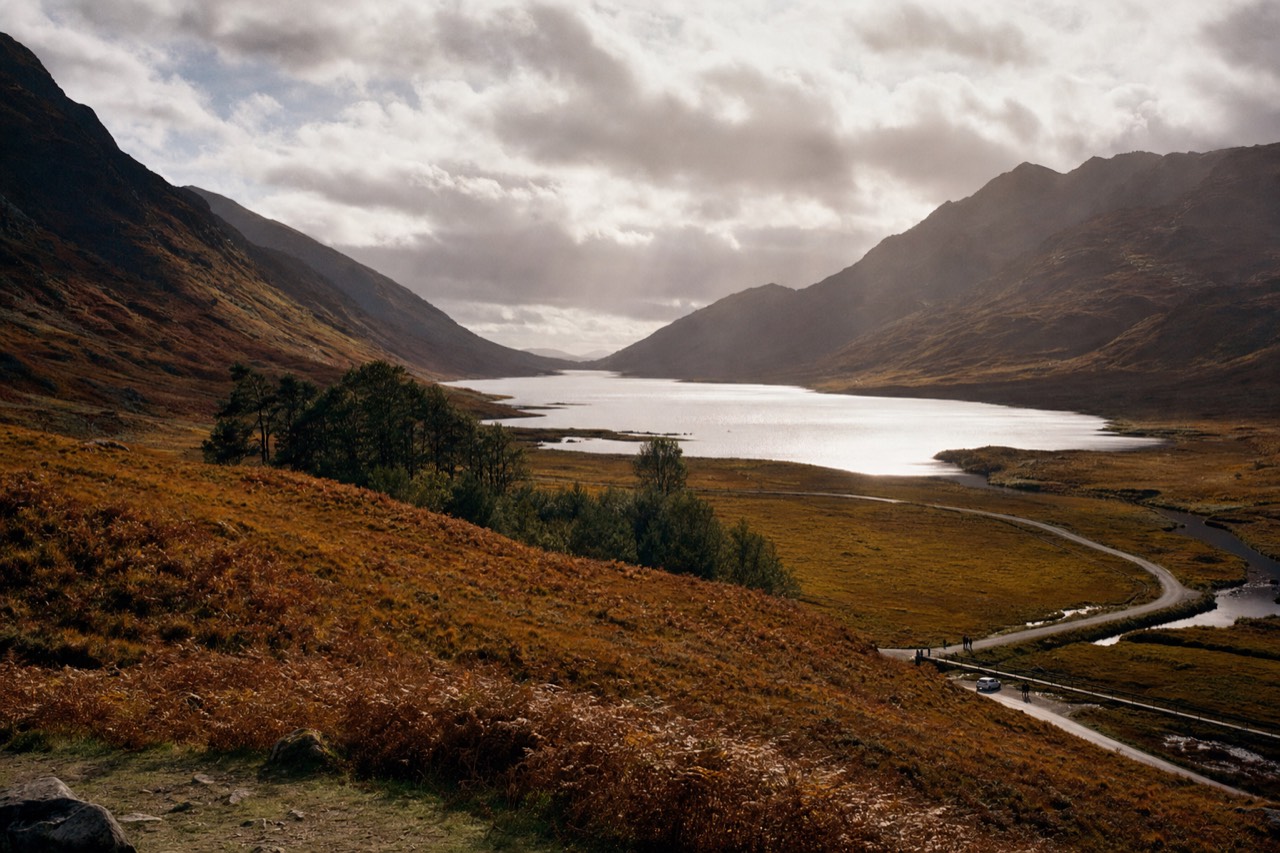
Two dates on the calendar settle this question, and neither of them is about temperature. The first is late May, when midge season begins. The second is mid-September, when it ends. Everything between those markers is the busiest, buggiest, most expensive stretch of the Scottish year, and everything outside them is the stretch where roads close and ferries stop running.
Which leaves two narrow, genuinely excellent windows: May, and the second half of September.
So what is the best month to go to Scotland?
May, if you want one answer. Midge activity has barely started, the Highland roads are open, ferries are running to their normal timetable, and every multi-day itinerary on this site has departures. Late September is the close runner-up for the same reasons in reverse: the midges have faded, the hills have turned, and the tour calendars are still open.
| Month | Midge pressure | Road and ferry risk | Multi-day tours running |
|---|---|---|---|
| January to March | None | Snow gates can close named Highland routes; ferry cancellations common | Reduced; one hostel-style itinerary does not run |
| April | None | Winter risk easing | Departures resume across the roster |
| May | None until the very end of the month | Low | Full calendar |
| June | Active | Low | Full calendar |
| July | Peak | Low, but roads and parking at their busiest | Full calendar |
| August | Peak into the middle of the month | Low, roads busiest | Full calendar |
| September | Falling away after mid-month | Rising toward the end | Full calendar |
| October | Over | Ferry disruption picking up | Last month before one itinerary pauses |
| November to December | None | Snow gates and ferry cancellations both live | Reduced |
The table is doing something specific: it separates the two things people conflate. Comfort peaks in May and September. Availability peaks from April to October. Weather risk peaks from November to March. Only May and late September sit in the good half of all three.
Why do midges decide so much of this?
Because they are not a minor nuisance in the places most visitors most want to be. Midge season runs from late May to mid-September and peaks through July into early or mid-August, and it hits hardest on the west coast and in the northwest Highlands, exactly where Skye, Glencoe and the Hebrides sit. Calm, humid, overcast conditions are the worst combination. Breezy, exposed or east-coast ground is noticeably better, which is why an Edinburgh trip in July feels completely different from a Skye trip in July.
The Scottish Midge Forecast tracks this week by week and is the source worth checking a few days before you leave rather than a few months before you book. What it will not tell you is that midges are a reason to avoid summer entirely. They are a reason to think about where you spend your summer evenings and whether you will be standing still outdoors at dusk.
A coach-based trip changes the calculation, since you have somewhere to retreat to between stops. A camping or self-driving trip in the same week does not. Driving it yourself versus riding a coach works through that trade-off properly.
What does the tour calendar itself tell you?
More than most seasonal guides admit. Operators who run Highland and island routes for a living vote with their departure dates, and those dates are public.
One of the hostel-style Highland itineraries on this site runs departures through October and then nothing until the following April. That is a company whose entire business is Skye and Loch Ness deciding the winter version is not worth selling. Another itinerary, the four-star coach touring one, opens its departures from September. The six-day Skye and Outer Hebrides route lists dates as far ahead as 2028, which tells you the operator considers it a stable, repeatable product across seasons.
Read together, those calendars point at the same conclusion as the midge data and the road data: April through October is the operating season, and the edges of it are the sweet spots.
Is winter ever worth it?
Sometimes, and for a specific kind of trip. City stays hold up well: the Edinburgh and Glasgow day tours on this site run year-round, castles and distilleries are indoor propositions, and the crowds thin dramatically. Historic sites switch to winter hours rather than shutting, and the guided castle visit with entry included is the most-reviewed listing on this site at 78,587 reviews. What does not hold up is an ambitious Highland driving itinerary.
Snow gates sit on named Highland routes and can close them outright in bad weather, including the A939 between Cock Bridge and Tomintoul, the A93 between the Spittal of Glenshee and Braemar, and the B974 at Bridge of Dye. Traffic Scotland publishes live closures. Ferry services to Skye and the Outer Hebrides also cancel more often through the winter for wind and swell, and a cancelled crossing takes your onward night's accommodation with it.
So the honest winter answer is: yes for a city break with day trips, no for a first visit built around the islands. Months to steer around goes into which weeks carry the most risk.
What about July and August?
They are the busiest months for good reason. Long evenings, everything open, every route running, festivals in Edinburgh. If those are your only available weeks, go, and plan around the two costs rather than pretending they do not exist.
The first cost is midges, at their annual peak, concentrated on the west. The second is competition: for beds, for tour seats, for parking, and for space in every passing place on every single-track road in the country. Booking further ahead is not optional advice in August, it is the difference between the itinerary you wanted and the one that was left.
Price is the third factor, and it is a separate conversation from conditions. The cheapest month to book handles that side with the actual rate data, and what a package actually covers sets out which costs are already inside a fare and which are not.
If Skye is the reason for the trip, the season question gets sharper still, because ferry-dependent routes have less slack in autumn and winter than mainland ones do. Skye tour choices covers which formats hold up in which months.
Frequently asked questions
Is May really better than June for a Scotland trip?
For midges, yes. Midge season starts late in May, so most of the month is clear while June is fully active, and the difference is sharpest on the west coast and in the northwest Highlands. For daylight, road access and tour availability the two months are broadly equivalent, with every multi-day itinerary running through both.
Can I still visit Scotland in winter?
Yes, with a different itinerary. City-based trips work well: the Edinburgh and Glasgow day tours run year-round, and castles and distilleries are indoor visits. What does not work reliably is a Highland or island route, because snow gates can close specific roads outright and ferry cancellations are more frequent through the winter months.
Which month has the fewest crowds while everything is still open?
Late September, on the evidence available. Midge pressure falls away after mid-month, the multi-day itineraries are all still running, and the summer peak has passed. Weather risk starts climbing toward the end of the month, so the earlier half of that window is the safer bet.
Three formats, three different answers to the season question: an island route that wants settled weather, a coach package whose dates open in September, and an indoor Edinburgh visit that does not care what the sky is doing.
Departure dates and current prices sit on each operator's own booking page and shift through the year. VisitScotland is the sensible cross-check for what else is open around your dates. If you already know your month, every multi-day route on this site shows its real rating, price and season on one page.