Things to Do in Edinburgh
A planning guide to a small city with an unusually high hit rate, and the handful of things that genuinely justify a queue.

Short answer
Edinburgh's core sights sit within a two-mile walk: the castle on its volcanic ridge, the Royal Mile, the Georgian New Town, and Arthur's Seat rising 251 metres straight out of a public park. Two full days covers the city comfortably. A third buys you a Highlands day trip or the whisky experiences.
Edinburgh is small enough to cross on foot in an hour and dense enough that people still miss half of it. The Old Town and the New Town together were inscribed as a World Heritage Site in 1995, covering roughly 4,500 buildings across two street patterns that could not be less alike: a medieval tangle draped down a volcanic ridge, and a grid of Georgian terraces laid out to a plan.
Most visitors spend their whole trip on the ridge. That is understandable, since the castle is up there, but the ridge is maybe a third of the city worth seeing.
The numbers make the case better than adjectives do. In 2025 the National Museum of Scotland drew 2,318,305 visits, making it the most-visited free attraction in the country and the twelfth busiest anywhere in the UK. Edinburgh Castle, the most-visited paid attraction in Scotland, took 2,044,963. National Galleries Scotland took 2,004,777. Three separate two-million-visit attractions within a twenty-minute walk of each other is unusual for a city of half a million people.
How the city is laid out, and why it matters
Edinburgh sits on the eroded remains of a volcano. The castle rock is the hard plug that survived; the Royal Mile is the tail of softer rock and glacial debris that streams east from it down to Holyrood. Once you have that picture, the whole street plan makes sense, including why everything on the Old Town side of the ridge involves stairs.
North of the ridge, across the valley that now holds Princes Street Gardens and Waverley station, is the New Town. It was laid out from the 1760s onward and its influence on European city planning is the other half of the World Heritage listing. It is flat, wide, quiet, and where most of the good food is.
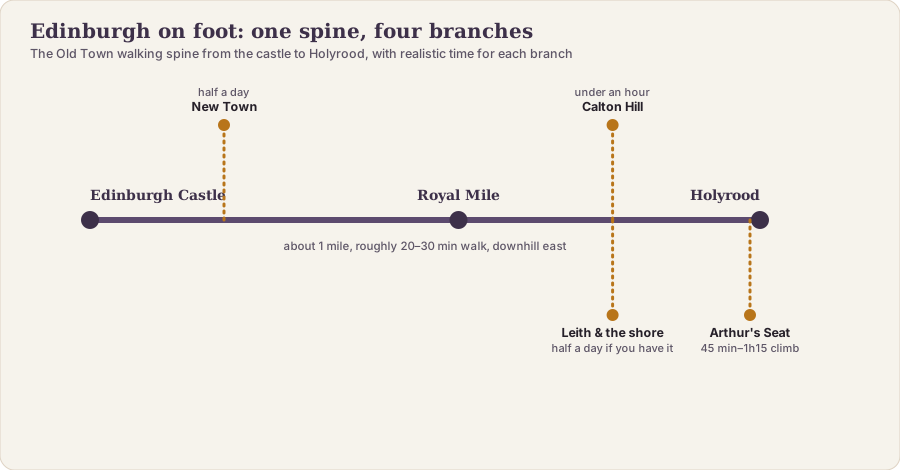
Three practical consequences follow. Walking east along the Royal Mile is downhill and walking back is not. The Old Town and New Town are five minutes apart but feel like different cities, so alternating between them keeps a day from blurring. And almost everything ticketed is on the Old Town side, which means the crowds concentrate on about one square mile.
| Area | What is there | Time it deserves |
|---|---|---|
| Castle ridge and Royal Mile | Edinburgh Castle, St Giles', the closes, whisky visitor centres | Half a day, more if you go inside things |
| New Town | Georgian terraces, National Galleries, Dean Village, restaurants | Half a day |
| Holyrood and Arthur's Seat | The palace, the parliament, a 251-metre hill in a public park | Two to three hours |
| Leith and the shore | Docks, the royal yacht, seafood, less tourism | Half a day if you have it |
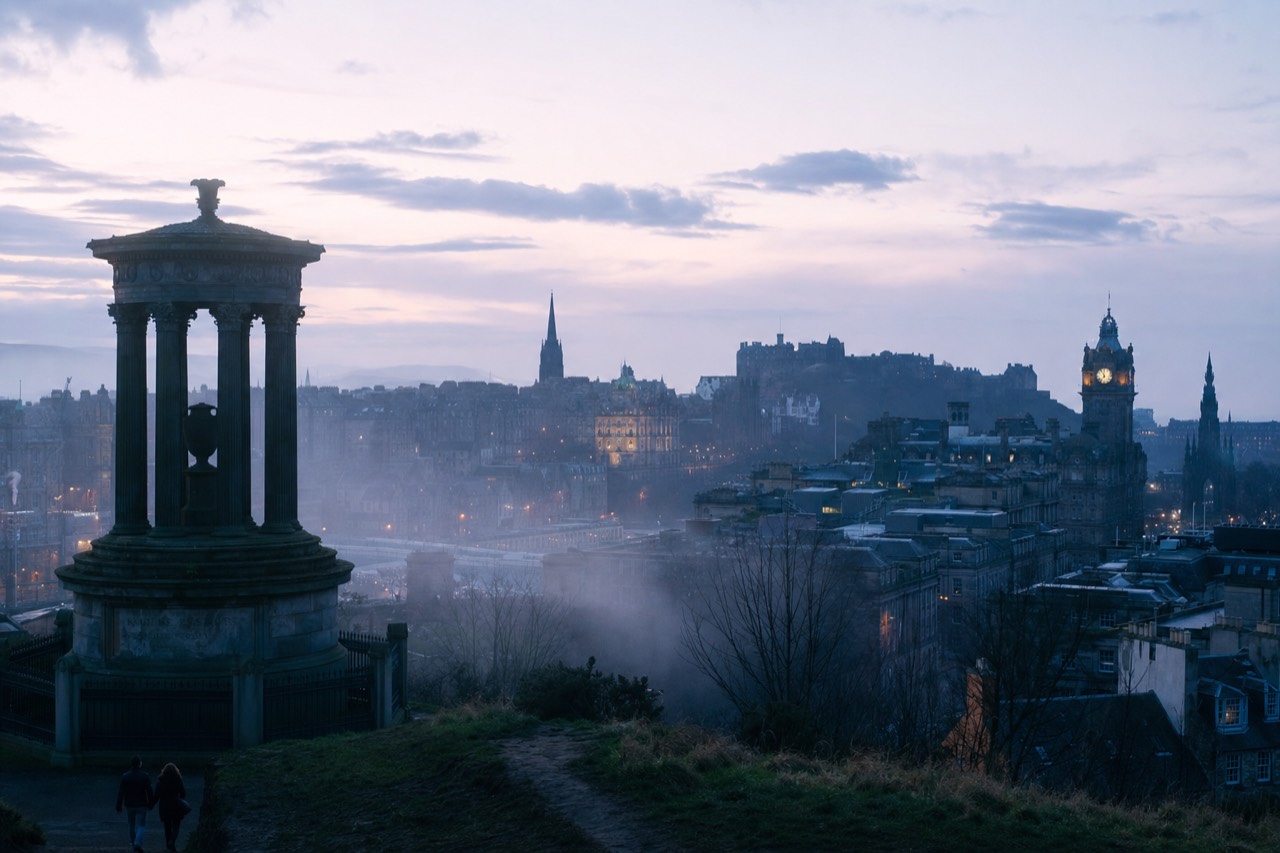
| Calton Hill and Old Calton | The monuments and the postcard view back at the ridge | Under an hour |
The things that are genuinely worth the ticket
Edinburgh Castle is the obvious one, and it is one of the rare famous sights that survives its own popularity. The Honours of Scotland, the Stone of Destiny, the Great Hall and St Margaret's Chapel are all inside the walls, and the view north across the New Town to the Firth of Forth is the best free-standing view in the city that does not require a hill climb.
Two things worth knowing before you go. Entry is ticketed and it is managed by Historic Environment Scotland, which cares for more than 300 sites nationally and asks visitors to book ahead rather than turn up. And the Scottish Outdoor Access Code, the law that gives you a broad right to walk across most Scottish land, explicitly does not cover buildings or Properties in Care. Free access to the countryside does not extend to the castle courtyard, which surprises more people than you would expect.
The guided castle visit with tickets included carries 78,587 reviews at 4.7 stars, by a wide margin the largest review base of anything on this site. A guide is not required to enjoy the site, but the difference between reading a panel about the Stone of Destiny and having someone explain what happened to it in 1950 is the difference between a walk and a story.
The National Museum of Scotland deserves its visitor figure. It is free, it is enormous, and the Scottish galleries in the older Victorian wing are the single best explanation of the country you will find anywhere. Give it two hours minimum. The roof terrace is a view most visitors never find.
The Palace of Holyroodhouse anchors the other end of the Royal Mile, and the ruined abbey beside it is more atmospheric than the state apartments. Opening depends on whether the royal household is in residence, so check before walking down.
Free Edinburgh, which is most of the best of it
The city is unusually generous to people who are not spending. The National Museum, the National Galleries, the Portrait Gallery and the Modern galleries are all free. So is St Giles' Cathedral, so are the closes off the Royal Mile, so is Dean Village, so is the whole of Holyrood Park.
Arthur's Seat is the standout. It is 251 metres at the summit, it is the main peak of a group of hills that make up Holyrood Park, and it is rocky and genuinely wild for something that starts a twenty-minute walk from the parliament building. The full ascent takes most people between forty-five minutes and an hour and a quarter depending on the route. Salisbury Crags, the cliff line below it, is a shorter and flatter walk with nearly as good a view.
Two notes on that. The path is not maintained to mountain standards but the exposure at the top is real, and people are injured there every year in wind or wet. And the summit in July at four in the afternoon is a queue for the trig point, so early morning or late evening is a different and better hill.
| Free | Ticketed |
|---|---|
| National Museum of Scotland | Edinburgh Castle |
| National Galleries Scotland | Palace of Holyroodhouse |
| Arthur's Seat and Holyrood Park | The Scotch Whisky Experience |
| St Giles' Cathedral (donation) | Johnnie Walker Princes Street |
| Calton Hill monuments | Camera Obscura and the Scott Monument climb |
| Dean Village and the Water of Leith walkway | Hop-on hop-off bus ticket |
The honest summary: you could have an excellent three days in Edinburgh and spend money only on food, transport and one castle ticket.
The closes, and the city under the city
The Royal Mile is not one street. It is a spine with dozens of narrow alleys running off it at right angles, called closes and wynds, dropping steeply down both sides of the ridge. Each was once the entrance to a tenement stair, and most are still public rights of way.
Walking them is the single best free thing to do in Edinburgh and almost nobody does it, because from the main street they look like private doorways. They are not. Advocate's Close, Riddle's Court, Lady Stair's Close and the long descent of the Fleshmarket Steps all connect the Old Town to the valley below, and the change in atmosphere ten metres off the main drag is immediate.
Beneath some of them the old street level survives. When the Royal Exchange was built over Mary King's Close in the eighteenth century, the lower storeys of the buildings were sealed rather than demolished, which is why a ticketed tour can walk you through seventeenth-century rooms under a functioning council building. The South Bridge vaults, sealed chambers inside the arches of an eighteenth-century viaduct, work on the same principle.
Two honest notes. The underground attractions lean hard into ghost-story framing, which some visitors love and others find undercuts genuinely interesting urban archaeology. And they are ticketed and popular, so summer evenings sell out. Walking the closes above ground costs nothing and needs no booking at all.
Whisky, without leaving the city
Scotland's distilleries are mostly a long way from Edinburgh. Speyside is four hours north, Islay is a ferry, and a same-day distillery round trip eats a whole day. The city solved this by building two serious whisky venues inside its own centre.
The Scotch Whisky Experience sits at the top of the Royal Mile, holds what it describes as the world's largest collection of Scotch, and runs a barrel ride that is more charming than it sounds. It carries 8,815 reviews at 4.7 stars and starts around $16.25, which makes this Royal Mile whisky visit one of the cheapest ticketed things in the city.
Johnnie Walker Princes Street is the other, a multi-floor brand experience with a rooftop bar and 3,103 reviews at 4.8 stars. It is a slicker and more expensive proposition, and it is genuinely good at explaining blending, which is the part of Scotch most visitors understand least.
Two real rules apply to any of this. Tastings in licensed premises are 18 and over across Scotland, and Challenge 25 is standard at the door. And Scotland's drink-drive limit is stricter than the rest of the UK, at 22 micrograms per 100ml of breath, which is set out on mygov.scot. If you are driving anywhere that day, ask for a driver's dram: most venues will decant your tasting into a small bottle to take home. It is a normal request and nobody will blink.
If distilleries proper are the goal rather than a city venue, our whisky tour comparison sets the Edinburgh options against the day trips that actually reach a working still.
How many days do you need?
Two full days is the honest minimum for the city itself. One day is a highlights reel and you will spend it queuing. Three days is comfortable and leaves room for a Highland trip. Five days is a proper stay that reaches Leith, the Forth bridges and a second city.
| Days | Realistic plan |
|---|---|
| 1 | Castle in the morning, Royal Mile down to Holyrood, National Museum in the afternoon |
| 2 | Add the New Town, National Galleries, Calton Hill and an evening in a Leith or Stockbridge restaurant |
| 3 | Add Arthur's Seat at dawn and one whisky venue, or spend the third day out of the city entirely |
| 5 | Add a full-day Highlands trip, Dean Village and the Water of Leith, and a day in Glasgow by train |
That third day is the one worth thinking about hardest. It is the point where a full-day trip out of the city becomes possible without cutting anything important, and our ready-to-book Edinburgh day tour comparison exists precisely for that decision.
Getting around, and when the bus earns its fare
Central Edinburgh is walkable and the walking is the point. Between the castle and Holyrood you will not want a bus. The tram runs from the airport through Princes Street and on to Newhaven, which handles the arrival and the trip to Leith.
The hop-on hop-off bus is a different calculation. As a way of getting from A to B it is slow. As a way of getting an oriented, narrated first pass at a city built on hills, with a 24-hour ticket at 4.6 stars across 7,620 reviews, it is a reasonable first-morning purchase for anyone who is short on time or not up for the gradients.
Where it genuinely helps is the outer stops: Leith, Holyrood, and the run along the New Town that most walkers skip. Where it does not help is the Old Town, which is quicker and better on foot.
Getting there, and moving on
Edinburgh is unusually easy to reach and unusually easy to leave, which is what makes it the default base for a first Scottish trip. The tram runs from the airport terminal into the city in about half an hour and continues through Princes Street to Leith. Waverley station sits in the valley between the Old and New Towns, which means you arrive in the middle of everything rather than on an edge.
| Journey | Rough time | Notes |
|---|---|---|
| Airport to city centre by tram | About 35 minutes | Terminal to St Andrew Square, runs frequently |
| Edinburgh to Glasgow by train | Under an hour | Several trains an hour; easiest second city |
| Edinburgh to Stirling by train | About 50 minutes | Castle is a walk up from the station |
| Edinburgh to Inverness by train | About 3 hours 30 | The practical way to reach a Loch Ness base |
| Edinburgh to London by train | About 4 hours 30 | Direct east-coast services |
That third row matters more than it looks. If Loch Ness or Skye is on the list, taking the train to Inverness and booking a shorter tour from there beats a fourteen-hour round trip by coach, and our Loch Ness format comparison sets out exactly what that swap buys.
Here is what a day in Edinburgh realistically costs before food and accommodation, using the current starting prices on the experiences covered above.
| Day shape | Ticketed spend, from |
|---|---|
| Free day: museums, closes, Arthur's Seat | $0 |
| Castle plus a whisky venue | About $36 |
| Sightseeing bus plus one whisky venue | About $44 |
| A full-day trip out to the Highlands | About $62 |
| A small-group filming-locations day trip | About $94 |
When to come
August is the extreme case. The Edinburgh Festival Fringe issued 2,604,404 tickets across 3,893 shows in 2025, with 53,942 performances in 301 venues from artists representing 62 countries. That is a genuinely astonishing thing to be in the middle of, and it also means every hotel bed in the city is spoken for and priced accordingly.
| When | Weather and light | Crowds | Notes |
|---|---|---|---|
| January to March | Cold, dark, often dry and clear | Lowest | Cheapest beds; some attractions on winter hours |
| April to May | Improving fast, long evenings by May | Moderate | Arguably the best value window of the year |
| June to July | Long light, changeable | High | School holidays; Highland day trips busiest |
| August | Warmest, wettest | Extreme | Fringe; book accommodation months out |
| September | Mild, settled, still long evenings | Falling | The locals' choice |
| October to December | Short days, cold, festive from late November | Moderate | Christmas market takes over Princes Street Gardens |
September is the quiet consensus favourite: the festival crowds have gone, the light is still good until eight, and prices drop noticeably in the first week. For the country-wide version of this question, see our answer on the best month to go to Scotland and the companion piece on the cheapest month to travel.
Day trips that fit around the city
Edinburgh's awkward geography is that the Highlands look close on a map and are not. A full-day coach trip north to Loch Ness and Glencoe from Edinburgh is around fourteen hours door to door, and it is the most-reviewed single tour on this site at 4.8 stars across 7,302 reviews. It works, but it takes the whole day.
Shorter options exist. Stirling Castle with the Kelpies and a whisky stop makes a fuller-feeling day for less driving. The Outlander filming locations trip runs a small-group loop through Culross, Doune, Blackness and Linlithgow, and at 4.9 stars across 2,041 reviews it is the highest-rated day tour in this roster.
That last one splits opinion by expectation rather than quality. People who watched the show come back delighted. People who have not still get four genuinely good historic sites and a guide who knows them. Our honest read on that is in is the Outlander tour worth it.
If the loch itself is the priority rather than the drive, our Loch Ness format comparison explains why an Inverness base changes the maths entirely. And if you would rather see a second city than a mountain, Glasgow is under an hour by train and our Glasgow planning guide covers what is actually there.
For a longer trip that treats Edinburgh as a start point rather than the whole thing, the multi-day packages run out of the city and cover the route, the ferries and the lodging in one booking.
What people ask before booking
How many days do you need in Edinburgh?
Two full days covers the castle, the Royal Mile, the New Town, one major museum and an evening properly. A third day lets you climb Arthur's Seat and add a whisky venue, or leave the city for a Highland trip. One day is possible but you will spend a meaningful part of it in queues.
Do you have to book Edinburgh Castle in advance?
Booking ahead is strongly advised and in peak months effectively required. The site is managed by Historic Environment Scotland, which asks visitors to secure a date online rather than turn up. Guided visits with the ticket included handle the entry for you, which removes the risk of arriving to a sold-out afternoon.
Is Edinburgh expensive?
Accommodation is the expensive part, especially in August when the Fringe fills the city. The sightseeing itself is cheaper than most European capitals because the national museums and galleries are free and the walking is the main activity. Ticketed experiences in the city start around $16 to $27, well below the cost of a full-day trip out of town.
Is Arthur's Seat a hard climb?
No technical skill is needed and most reasonably fit people manage it in under an hour. The ground is rough and rocky near the top and there is genuine exposure on the summit ridge, so it is worth proper shoes and worth skipping in high wind. Salisbury Crags is the easier alternative with a similar view over the city.
Can you visit a real distillery from Edinburgh in a day?
Yes, but it costs the whole day and the drive is longer than most people expect. The city's own whisky venues are the efficient answer if you have two days rather than five. If you want a working still, plan a full-day tour rather than trying to fit one around an afternoon.
Is August worth it, or is the Fringe too much?
It depends entirely on whether you came for a festival or for a city. In August the streets are full, accommodation prices roughly double and the queues at every fixed attraction lengthen, but there are thousands of shows and the atmosphere is genuinely unlike anywhere else. If the festival is not the reason for the trip, September gives you the same city at half the pressure.
Every Edinburgh experience mentioned here sits in the Edinburgh day tours section of the homepage with its real rating, review count and starting price attached, and the full cost breakdown for a Scotland trip puts those figures in the context of a whole holiday budget.
If it comes down to three bookings, these are the ones that cover the castle, the city itself, and the day you spend outside it.